Let's name the problem first
Anxiety-driven anorgasmia is not a lack of desire. It's not a physical problem. It's your nervous system stuck in a cage match with itself. Your brain wants to feel good, but your body is too busy scanning for threats to let pleasure through.
When you're anxious, you're in sympathetic activation. Fight or flight. Your pelvic floor tightens. Your blood vessels constrict. Your clitoris actually becomes less sensitive, not more. You can be wildly turned on upstairs and completely locked down downstairs, which is incredibly frustrating and also completely normal.
The good news is that this pattern is learnable, which means it's unlearnable.
Why anxiety blocks orgasm at the nervous system level
Here's the mechanics. Orgasm requires your parasympathetic nervous system to be in charge. That's your rest and digest system. It's the opposite of fight or flight. When you're anxious, your sympathetic system won't step aside.
Think of it like a dimmer switch. Anxiety turns down your ability to feel pleasure by turning up your vigilance. Your body literally cannot fully relax into sensation when part of your brain is checking for danger. This is why white-knuckling your way through it never works. You can't think yourself into calm.
For people with anxiety-based anorgasmia, the cycle usually looks like this: you want to have an orgasm, so you try harder, which creates performance pressure, which triggers anxiety, which shuts down sensation. Every attempt reinforces the belief that something is broken.
It's not. Your system just needs a different entry point.
Why lemon clitoral vibrators work differently for anxiety
Lemon vibrators, especially suction-based devices, bypass the performance trap because they work through two mechanisms that anxiety usually blocks.
First, they provide direct, consistent stimulation that your brain doesn't have to generate. With anxiety, one of the biggest obstacles is mental chatter. The voice that says "am I close yet," "why isn't this working," "what if I can't come." A lemon clitoral vibrator gives your nervous system something concrete to track instead of ruminating. You're not trying to create pleasure. You're just receiving it.
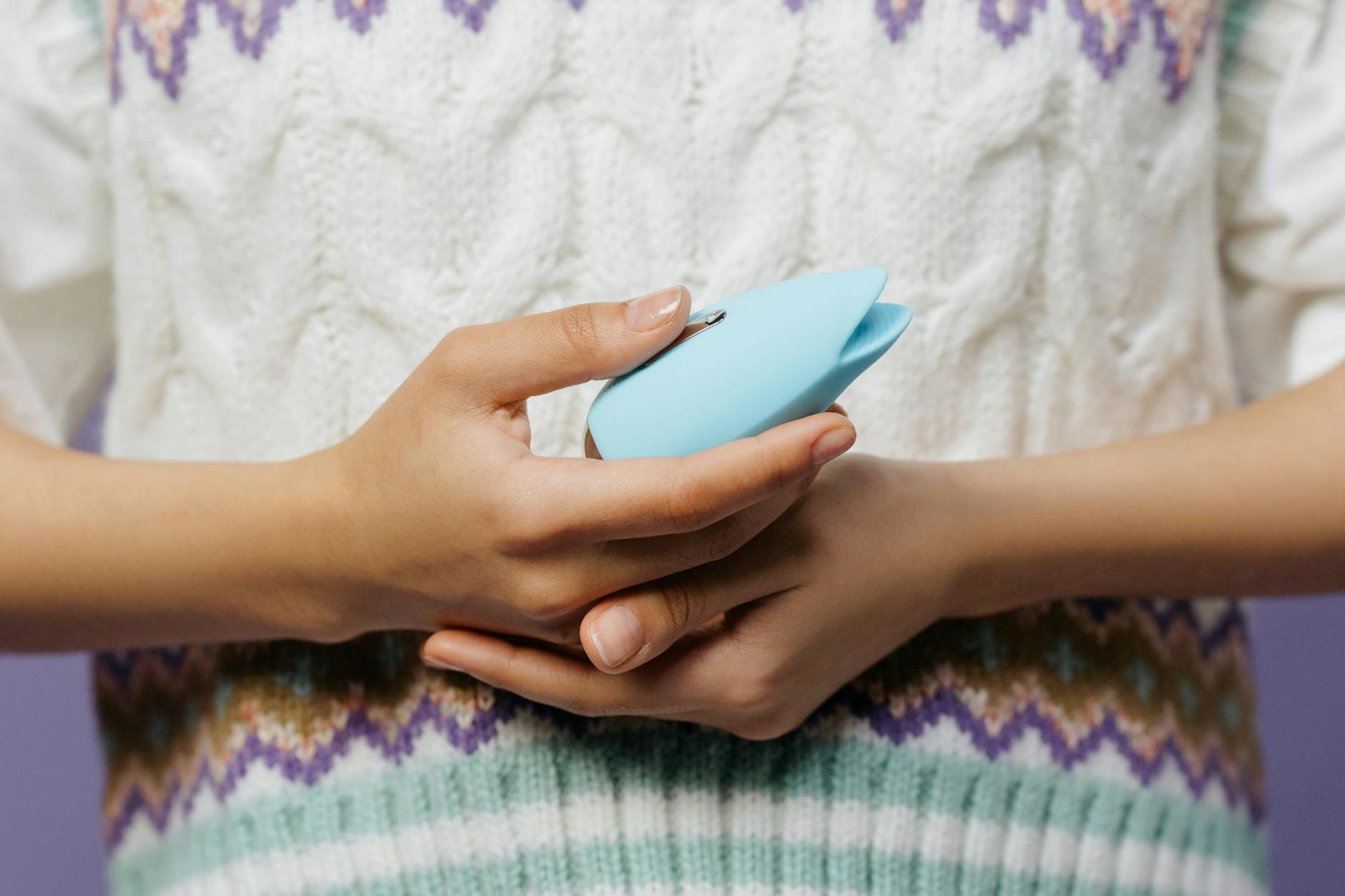
Second, suction stimulation triggers a different neural pathway than vibration. Suction devices like the Lem create a gentle pull-and-release pattern that some people find more soothing than buzzing. This matters for anxiety because a pounding vibration can feel intense in a way that activates your sympathetic system further. Suction feels more like a massage, a rhythm your body can settle into rather than brace against.
Third, the physical sensation can interrupt rumination. When you're receiving consistent, novel sensation, your brain has less bandwidth for anxious thoughts. You're not meditating yourself into calm. You're just too busy feeling something good to spiral.
Starting over after anxiety has blocked orgasm
If you've had anorgasmia for a while, your nervous system has learned a very reliable pattern: stimulation equals pressure equals anxiety equals shutdown. You need to break that chain by removing the performance stakes.
Here's what I recommend to clients with anxiety-driven anorgasmia:
Separate exploration from outcome. Use a lemon clitoral vibrator with zero expectation of orgasm. Not "let's see if this works." Try "I'm going to spend ten minutes feeling what sensations exist." This is genuinely hard because your brain will scream at you to try for the finish line. Ignore it. The finish line is what created this mess.
Use it solo first. Partner presence adds a layer of performance pressure even if the partner is trying to be supportive. Solo exploration lets you be selfish, quiet, and fully tuned into your own body without managing anyone else's experience.
Try it during a low-anxiety time of day. Morning, after coffee, after a walk, whenever you naturally feel calmest. Don't try to use a lemon vibrator when you're already activated by stress. You're trying to teach your system a new pattern, not fight your way through a high-anxiety moment.
Keep going for sessions without sensation payoff. This is the weirdest part but also the most important. Your brain has learned that stimulation should equal orgasm. If it doesn't, panic follows. You need to prove to your nervous system that sensation without orgasm is still fine. That pleasure without a finish line is enough.
When to add a partner back in
Once you can have consistent sensation alone without the pressure spiral, bringing a partner back in can actually help. But it has to be reframed.
Tell your partner: "I'm rebuilding my relationship with pleasure. That means sometimes we use this together and nothing happens, and that's the goal. I'm not trying to orgasm. I'm trying to stay calm." This removes the spectator pressure and also gives your partner something concrete to do besides watch and wonder.
If your partner can hold space for sensation without outcome, that's actually deeply intimate. It teaches your nervous system that you're safe enough to receive pleasure without performing. And ironically, once that safety is established, orgasm often follows without anyone trying for it.
The role of lemon vibrators versus medication or therapy
Let me be direct: if anxiety is severe enough to cause anorgasmia, a lemon clitoral vibrator alone won't fix it. But it's an excellent tool alongside therapy or medication.
Anxiety-based anorgasmia often improves when you address the underlying anxiety. That might mean SSRIs, which can initially affect sensation but usually stabilize. It might mean therapy, especially something like cognitive behavioral therapy or somatic therapy that works with your nervous system directly.
A lemon vibrator fits into that picture as a way of practicing the new pattern. You're rewiring your body's response to stimulation in a low-stakes environment. Therapy works on the anxiety. The vibrator works on the conditioned response.
Why consistency matters more than intensity
With anxiety-driven anorgasmia, consistency of sensation beats novelty or intensity. This is counterintuitive because you might think you need maximum stimulation to overcome the block. Actually, you need the opposite: gentle, predictable sensation that your nervous system learns to trust.
The Lem and other lemon clitoral vibrators are designed with multiple intensity levels for this reason. You're not chasing sensation. You're teaching your body that it can relax into it. Start at pattern one. Stay there for several sessions. Your sensitivity will return, and then intensity becomes an option, not a requirement.
FAQ
Can anxiety anorgasmia go away completely?
Yes. Anxiety-driven anorgasmia is responsive to treatment because it's a learned pattern, not a structural problem. As your anxiety decreases and you rebuild trust in your body's capacity for sensation, orgasms usually return. Some people find their orgasms become more reliable than they were before the anxiety, because they've learned what actually helps instead of defaulting to old patterns.
Is it normal to feel nothing even with a lemon vibrator at first?
Completely. If anxiety has blocked sensation for months or years, your body might take time to remember how to feel. Some people describe the first few sessions as "numb" or "far away." That's not failure. That's your nervous system cautiously opening. Keep going. Sensation usually deepens over 2-4 weeks of consistent, low-pressure use.
Should I use a lemon clitoral vibrator during sex with a partner if I have anorgasmia?
Maybe eventually, but start solo. The presence of a partner watching you use a vibrator can amplify performance anxiety if you're already dealing with anorgasmia. Once you can have sensation solo without pressure, integrating it into partnered sex becomes much easier. Some couples find it reduces anxiety because they both know an orgasm is the goal, not a mystery.
Does alcohol help or hurt the process?
It depends on why you're using it. If you're using alcohol to numb anxiety before sex, you're reinforcing the pattern that you need external calm. Better to practice feeling sensation stone sober so your nervous system learns it can be safe without chemical help. That said, a glass of wine as part of a relaxing evening is different from using alcohol as a crutch for performance. Use your judgment.
How long before I can orgasm again?
Varies wildly. Some people rebuild sensation in 2-3 weeks of consistent use. Others take 2-3 months. The timeline depends on how long the anorgasmia has lasted, how severe the underlying anxiety is, and whether you're also getting support for the anxiety itself. Pushing for a timeline usually backfires because that's performance pressure, which is what started this in the first place.
Can I use a lemon clitoral vibrator if I'm taking antidepressants?
Yes, and it's often helpful. Some antidepressants reduce sensation temporarily, but many people find that pairing medication with intentional, low-pressure exploration using a lemon vibrator helps them reconnect with pleasure while the medication stabilizes their mood. Talk to your doctor if sexual side effects are significant, but don't assume SSRIs and vibrators don't mix.
The real work is nervous system retraining
A lemon clitoral vibrator is a tool. The real work is teaching your nervous system that pleasure is safe, that sensation without orgasm is enough, and that you don't have to perform to deserve to feel good.
Anxiety anorgasmia usually starts with external pressure. A partner who wants you to orgasm faster. A culture that treats orgasm as the metric of good sex. Your own internalized belief that your body should work a certain way. The vibrator helps, but the shift happens when you stop trying to fix yourself and start exploring what actually feels good with zero judgment.
If you're struggling with this, consider talking to a therapist who specializes in sex and anxiety. You deserve support that meets you where you are, not shame for how your body has responded to pressure. And yes, a lemon clitoral vibrator in your own hands, on your own timeline, can be a powerful part of that healing.
Your capacity for pleasure is still there. Your nervous system just needs to remember that it's safe to feel it.