
Let's talk about the desire gap nobody warns you about
Somewhere around 40 or 45, it happens. One partner still wants sex twice a week. The other is content with once a month, or less. Or maybe it flips the other way. One partner's body has changed. Hormones shifted. Life got heavier. And suddenly the desire that used to sync up feels like it's living on different timelines.
This isn't a sign the relationship is broken. It's one of the most common friction points in midlife partnerships, and it's almost never talked about honestly.
Here's the thing: desire gaps in your 40s and 50s aren't solved by communication alone, or by trying harder, or by one partner resigning themselves to less pleasure. They're solved by tools that make pleasure feel less like work and more like something that actually belongs to both of you again.
Why desire gets mismatched in the first place
There are usually three things happening at once.
First, hormonal reality. If you're in perimenopause or menopause, estrogen and testosterone drop. Arousal becomes slower. Sensation feels muted. Some people describe it as the dimmer switch being turned down. Your partner, meanwhile, might not be experiencing any of that. Their body is the same as it always was. Suddenly, you're not operating from the same baseline.
Second, the invisibility problem. You can't see your partner's testosterone dropping. You can't see the fatigue, the hormonal weight, the shifts in how touch feels on skin. So instead of understanding it, partners often interpret the change as "they're not interested in me anymore." And the higher-desire partner starts carrying resentment. The lower-desire partner feels pressure and guilt. Both feel alone.
Third, the performance trap. Once a desire mismatch appears, sex becomes something you're supposed to want, not something you actually want. You show up. You try. But you're not aroused, so the whole thing takes twice as long and feels like work for both of you. After a few rounds of that, the lower-desire partner starts avoiding it altogether.
How lemon vibrators shift the whole dynamic
Let me be specific about what I see in my practice when couples introduce air-suction clitoral vibrators like the Lem into a mismatched-desire relationship.
First, pleasure becomes independent. When one partner uses a lemon clitoral vibrator, they're not waiting for their body to cooperate the old way. They're not dependent on arousal building in the textbook progression. Air-suction technology works on nerves, not friction. It's faster. It's more reliable. And suddenly the lower-desire partner can actually reach orgasm in 5 to 10 minutes instead of 45. That changes the entire calculus of whether sex is worth the time investment.
Second, it removes the pressure cooker. When the higher-desire partner knows their partner isn't trying to conjure arousal from nothing, there's less tension in the room. Less desperation. Less "are you into this or not?" hanging in the air. The partner with lower desire can relax because they're not being watched, hoping their body will perform. And paradoxically, when the performance pressure drops, desire often returns.
Third, it reframes what sex is. In a mismatched-desire relationship, sex has become a place where one person is always giving and one person is always receiving (or declining). Introducing a lemon vibrator together changes that. It becomes something you're both exploring. Something neither of you has "figured out" yet. That curiosity is relationship glue.
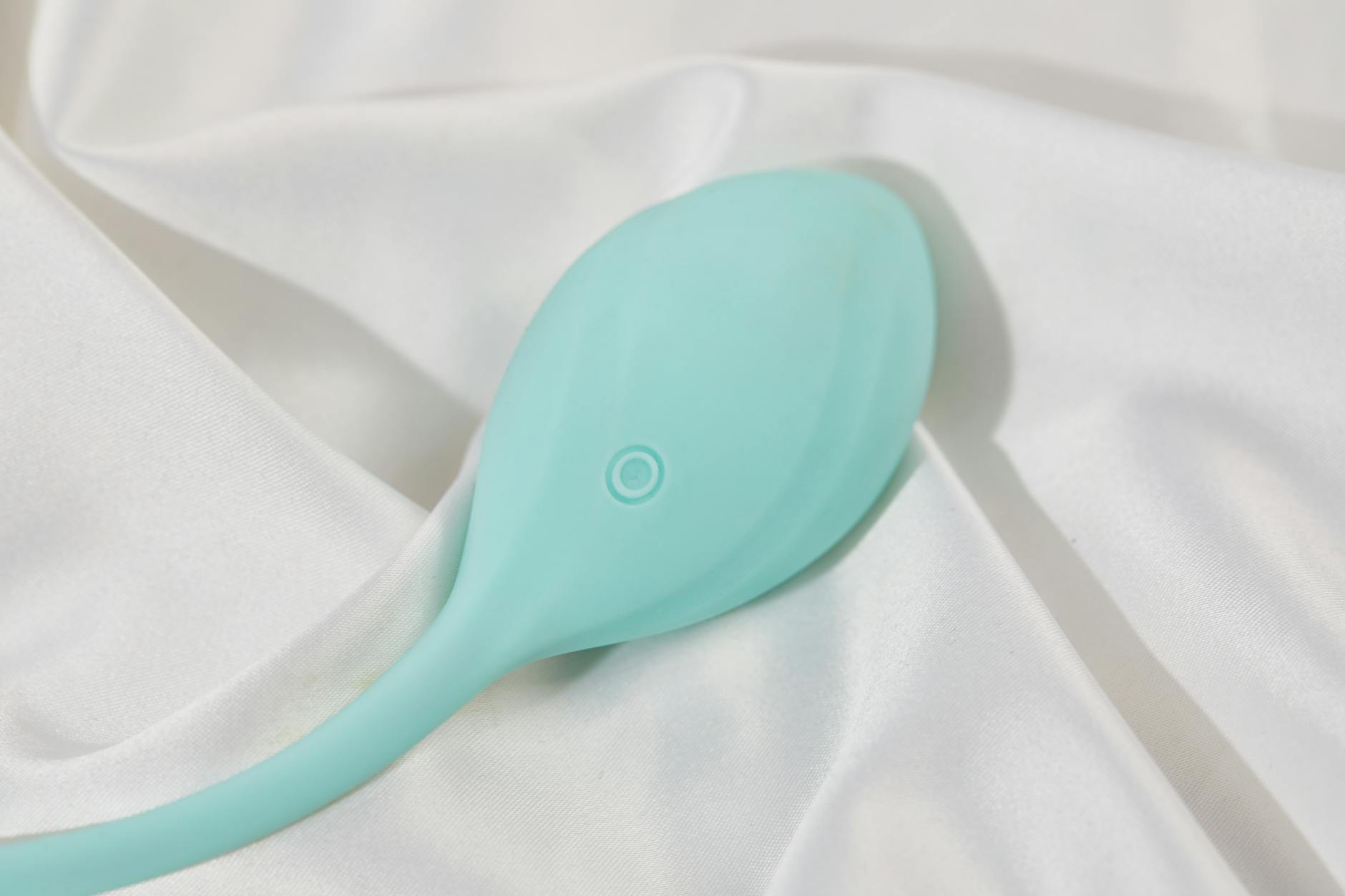
Photo by IFONNX Toys on Pexels
How to introduce this without it feeling awkward
The difference between this working and this feeling forced is entirely in the framing.
Don't frame it as a solution to the problem. Frame it as an experiment you're both curious about. "I read that a lot of couples are using these air-suction vibrators and getting more pleasure faster. Want to try it together?" Low stakes. No pressure. You're both on the same side of the experiment.
Start with your partner's pleasure, not yours. Let them experience what a lemon clitoral vibrator feels like first. No penetration, no partnered sex yet. Just them, alone, learning what sensation actually feels like with suction technology. This takes about a week or two, depending on how often they want to explore. They're building a new neural map. Let them do that without an audience.
Then bring it into partnered time. Early on, this might mean you're using it while they're touching you, or you're using it while they watch. You're not trying to have partner sex yet. You're just expanding what pleasure can be together. Eventually, this can absolutely include partner sex with the lemon vibrator involved. But the early stage is just about each of you knowing what your own pleasure actually feels like when you're not rushed.
Why this works specifically for midlife desire gaps
There's something particular about desire gaps in your 40s and 50s that makes lemon vibrators more effective than they might be at 25.
For one, you've been together long enough that the novelty of new sexual techniques alone isn't going to move the needle. You need something that actually changes the physical experience. Air-suction technology does that in a way traditional vibrators often don't. The stimulation is different enough to surprise you both.
For another, you're both mature enough to talk about the fact that your bodies have changed without it becoming a referendum on the relationship. You can say "my arousal is slower now" and your partner can hear that as data, not rejection. That honesty creates the opening for tools to help.
Third, in midlife, you're usually less focused on what sex is "supposed" to look like. You're less interested in performing for an imagined audience. You actually care about pleasure. And lemon vibrators are optimized for pleasure, not performance.
The conversation that needs to happen first
Before you buy anything or introduce anything, you need one conversation. And it needs to separate three things that usually get tangled together.
Conversation 1: "My body has changed, and arousal feels different to me now." This is not about your partner. This is about you describing your own physical experience.
Conversation 2: "I miss feeling connected to you sexually." This is about the relationship gap, not about blame.
Conversation 3: "I want us to find a way to both feel good again. I don't want to push myself to want something I don't want, and I don't want you to feel rejected." This is the problem statement.
Once those three things are clear and separate, introducing a tool like a lemon vibrator isn't threatening. It's practical.
What changes when you use lemon vibrators for desire reconnection
I've watched couples report back after three or four months of using air-suction clitoral vibrators together. Here's what shifts.
First, sex stops feeling like a chore for the lower-desire partner. It's faster. It's more reliably pleasurable. So they actually want it sometimes, not just do it to appease their partner.
Second, the higher-desire partner feels less resentful. They're not waiting and wondering and analyzing their partner's arousal level anymore. They're both getting something real. The energy in the room changes.
Third, and this is the part that surprises people, desire often becomes more matched. Not because the lower-desire partner suddenly wants sex more, but because they're having better sex when they do, so the frequency naturally increases a little. And because the pressure is off, they're not unconsciously avoiding it.
Fourth, intimacy spills into other parts of the relationship. You're making eye contact again. You're laughing. You're touching outside the bedroom without it being a setup for sex.
None of this happens overnight. But in three months, most couples report a noticeable shift.
The questions that usually come up
Yes, this works for people who've been together 20 years and feel like you've tried everything. Lem vibrators work because they're not about technique or effort or communication. They change the actual physical sensation, which is often what's missing.
No, using a vibrator doesn't mean your partner doesn't want you. In fact, when a lower-desire partner gets to experience real pleasure quickly and reliably, they often want more partnered sex, not less. They want to repeat that feeling.
Yes, you can use a lemon clitoral vibrator during partner sex. You can use it while they're inside you. You can use it while they're touching you. It's additive, not replacement.
No, you don't need to spend a lot of money. You don't need multiple devices. One good tool that you both understand is better than five things nobody's comfortable with.
The real outcome
Midlife desire gaps are one of the main reasons couples drift apart. Not because the love is gone, but because the physical connection stops feeling good for one or both partners, and then shame and resentment fill the space where desire used to be.
Lemon vibrators don't fix the emotional work of a relationship. You still need to talk. You still need to prioritize each other. But they remove one major blocker. They make pleasure reliable again. And when pleasure is reliable, people show up. They stay curious. They want to keep exploring.
That's not a small thing in a midlife partnership. That's the difference between drifting and staying connected.
People also ask
Can using a lemon vibrator make my partner feel inadequate?
Not if you frame it right. Introduce it as "both of us exploring together," not as "you're not doing it for me." And let your partner experience it solo first, so they understand it's about sensation, not about comparison. Most partners find it actually reduces inadequacy because they're no longer carrying the weight of their partner's pleasure entirely on their shoulders.
How long does it take to see a shift in desire after introducing lemon vibrators?
Most couples report a noticeable shift within two to four weeks of using a lemon clitoral vibrator together regularly (a few times a week). But the real relationship change, the reconnection part, usually takes two to three months. You're rebuilding a neural association between partnered time and actual pleasure. That takes repetition.
What if my partner doesn't want to use a vibrator?
That's information. It usually means they have shame around it, or they're worried it reflects something about their attractiveness, or they genuinely don't want to. Honor that. But also dig into it. "What specifically feels uncomfortable to you?" often opens up the real conversation. Sometimes it's a misunderstanding. Sometimes it's a genuine boundary. Either way, you want to know before you push.
Is it weird if only one of us wants to use the lemon vibrator?
No. In fact, that's super common in desire-mismatched couples. The lower-desire partner might be the one who primarily uses it for their own pleasure, and the higher-desire partner is using it with them. Or vice versa. There's no "right" distribution. Whatever increases pleasure for both of you is the right answer.
Can lemon vibrators actually fix a broken relationship?
No. If the relationship has deeper problems—infidelity, contempt, lack of emotional safety—a vibrator won't fix that. But if the relationship is solid and desire just got mismatched, lemon vibrators can absolutely help rebuild that connection. The pleasure is real, which gives you both something good to build on.
Should we talk about desire gaps before or after trying a lemon vibrator?
Before. Have the conversation first. Understand what's actually shifted for each of you. Then introduce the tool as a response to that honest conversation, not as a surprise. The conversation is what makes the tool work.
What comes next
Desire gaps in midlife don't have to mean the end of sexual connection. They're often just a signal that your bodies have changed and your approach needs to change with them. Lemon vibrators are one way to rebuild that connection when arousal has become slower or harder to access.
If you're feeling stuck in a desire mismatch and you want to talk through next steps, reach out. I work with couples on exactly this, and it's more fixable than it feels right now.
Your pleasure matters. Both of your pleasure matters. And in a partnership, that's worth protecting.
Get in touch if you want to explore this further.