Let's start with what's actually happening
Perimenopause is the five to ten year stretch before menopause officially shows up, and it's absolutely brutal for desire. Not because anything's wrong with you. Because your hormones are on a chaotic swing.
Estrogen spikes and plummets unpredictably. Progesterone drops. Sleep tanks. Hot flashes wake you at 2 a.m. drenched in sweat. Your brain is flooded with cortisol from all this chaos. And somewhere in the middle of that storm, the thing that used to happen automatically. The wanting. The reaching for your partner. The curiosity about your own body. It just. Stops.
Most women I work with describe it like someone dimmed a switch they didn't know existed.
Why perimenopause specifically kills arousal
Here's the chain reaction. Progesterone is one of your calmness hormones. When it starts dropping, anxiety goes up. That anxiety makes sleep worse. Bad sleep makes everything harder. Your body is exhausted because it's literally running on fumes trying to regulate all these hormone shifts.
Meanwhile, estrogen is still here, just unpredictable. One week your tissues are fine. The next week they're dry. One week you sleep eight hours. The next you get four.
And then there's this: your brain doesn't want sex when your body feels like it's under threat. Perimenopause, on a neurological level, can feel threatening. Hot flashes are your body's alarm system. Night sweats are your autonomic nervous system in overdrive. When you're in that state, the brain's pleasure center goes quiet.
Desire isn't broken. It's just being crowded out by survival mode.
The physical piece that most doctors skip
Even if your estrogen is still technically "normal" by blood test standards, perimenopause changes how quickly blood flows to your genitals. It changes how sensitive nerve endings are. It changes how fast you can build arousal.
This is where a lot of women get stuck. They feel like something's missing because arousal used to be faster, easier, more automatic. They're right. It was. And that's not your fault. That's perimenopause.
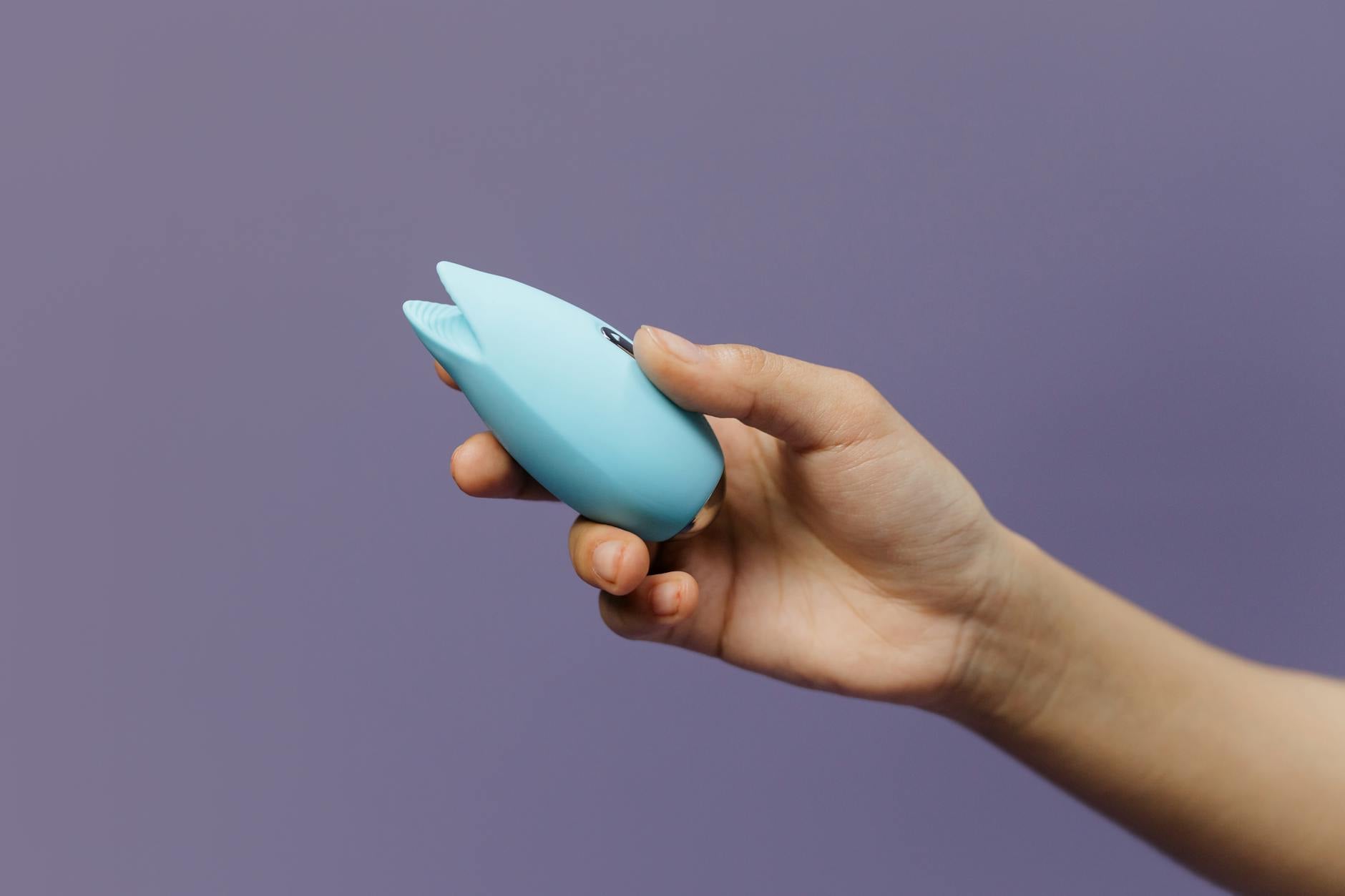
The good news: this is exactly what lemon vibrators are built for. Air-suction clitoral stimulation works differently than traditional vibration. It creates a gentle pulling sensation that doesn't require the same degree of pre-arousal or genital blood flow to feel incredible. You don't have to wait for your body to "catch up" the way you might with a standard vibrator.
How lemon sexual toys rebuild arousal without forcing it
The suction pattern of lemon clitoral vibrators mimics the kind of stimulation that works best when arousal is slow to build. Instead of needing your body to be fully engaged already, the sensation itself can activate arousal. You're not trying to get there. You're letting the toy help your body remember what pleasure feels like.
This matters because perimenopause arousal is often stuck in a feedback loop. You don't feel like having sex, so you don't touch yourself or ask your partner for touch. Days go by without any genital sensation. Your body kind of forgets what that feels like. Desire drops further.
Using a lemon vibrator breaks that loop. You're reintroducing sensation deliberately. You're not waiting for desire to show up first. You're using the physical experience to wake up the neural pathways that drive desire.
Most women report that after a few weeks of regular use, spontaneous arousal starts coming back. Not at the same speed it did before perimenopause. But it comes back.
The setup that actually works
Honestly though, perimenopause arousal needs more scaffolding than it used to. You can't just grab your lemon sucker and expect magic. Here's what actually works.
First, manage the sleep and cortisol piece. I know this sounds unrelated, but arousal lives in a part of your brain that only turns on when your nervous system feels safe. If you're exhausted and running on cortisol, that part stays locked. This means sleep hygiene, stress management, and sometimes melatonin or magnesium before you even think about pleasure.
Second, give yourself permission to be slow. Perimenopause arousal requires longer warm-up time. Budget 20 to 30 minutes if you're with a partner, or give yourself space to explore alone without a performance deadline. This is not wasted time. This is recalibration.
Third, use lubrication even if you don't think you need it. Estrogen fluctuations change lubrication whether or not you notice it. Water-based lube is your friend here. It makes everything easier and takes pressure off your body to produce its own.
Fourth, start at low intensity and let sensation build. With lemon clitoral vibrators, patterns one and two are usually where perimenopause arousal starts waking up. The suction is gentle. It's not aggressive. That matters.
The partner piece (if you have one)
A lot of the couples I work with hit a wall during perimenopause around desire. One partner is running on fumes, and the other feels rejected. This is where things get tricky.
Most helpful thing you can do: separate sex from touch. They're not the same thing. You can touch your partner, have your partner touch you, use a lemon vibrator together, and have zero expectation that it leads to penetration or orgasm. That removal of pressure often brings desire back faster than anything else.
Second: talk about what you're experiencing. Not in a medical way. Just honest. "My body is doing weird stuff right now and my brain is fried. I'm not turned off by you. I'm turned off by everything, including myself." Partners need to hear that distinction.
Third: let the toy be part of your intimate routine without it being a Band Aid. Some couples integrate a lemon vibrator into foreplay. Others use it during solo time and just share what they're experiencing. Whatever bridges the gap without adding pressure is the right move.
When to loop in your doctor
If low arousal is accompanied by vaginal dryness that hurts, or if arousal genuinely hasn't moved in months even with lifestyle adjustments and toy use, talk to your gynecologist about perimenopause hormone testing. Not all doctors are great at this. But a menopause informed doctor can identify where you are in the transition and sometimes offer targeted support.
Likewise, if anxiety or depression is part of your perimenopause picture, that's worth addressing separately. Low desire from depression looks different than low desire from hormones. Both are real. Both are treatable.
But most of the time, what's happening is straightforward. Your body is in transition. Your nervous system is overwhelmed. And slowly, with patience and the right tools, desire comes back.
The practical reality
Perimenopause low arousal is not a character flaw. It's not a sign your partnership is in trouble. It's not a preview of the rest of your life. It's a temporary hormone storm that your body is trying to navigate.
Lemon clitoral vibrators help by offering a form of stimulation that works with your body where it is right now, not where it used to be. You're not trying to force yourself back into old patterns. You're building new pathways to pleasure that fit this chapter of your life.
The desire comes back. It just comes back on a different timeline.
People also ask
How long does perimenopause low arousal last?
Low desire can persist throughout the entire perimenopausal window, which is typically five to ten years. However, most women experience fluctuation rather than complete flatline. You might have weeks where arousal feels closer to normal, then weeks where it's nowhere. The good news: it's not permanent. Once you're through to actual menopause, desire often stabilizes again, sometimes even stronger than before.
Can lemon vibrators really help if I feel numb down there?
Yes, but with caveats. Numbness during perimenopause usually means reduced nerve sensitivity from estrogen fluctuation and cortisol overload. Lemon suction toys work well because the sensation is different from touch you're used to. Your nerve endings might wake up to that novelty. Start low and gentle. Give it time. If numbness persists for months, see your doctor to rule out other causes.
Is it normal to not want my partner anymore during perimenopause?
Completely normal. Low desire during perimenopause isn't about attraction. It's about your nervous system being flooded and your brain being somewhere else. Many women feel this way about everything, not just their partner. The key is communicating that this is temporary and situational, not a relationship problem. Using a lemon clitoral vibrator solo often helps because the pressure is off.
Should I try hormone therapy instead of using a vibrator?
These aren't either/or. Some women benefit from HRT or bioidentical hormone support during perimenopause. Others manage fine with lifestyle adjustments. Most benefit from both. A lemon vibrator costs $89 and has zero side effects. Hormone decisions are more complex. Talk to your doctor about what makes sense for your specific situation, and use a vibrator in the meantime.
Does using a lemon vibrator during perimenopause make orgasms easier?
Often yes, for two reasons. First, the suction stimulation activates arousal more reliably than waiting for it to show up on its own. Second, orgasms during perimenopause can feel harder to reach because of those nerve and blood flow changes we talked about. Lemon suction toys are specifically designed to stimulate the clitoris in a way that bypasses some of that friction. You're using the tool that matches what your body needs right now.
What if my partner gets jealous about me using a lemon vibrator?
That's a conversation, not a reason to stop. Using a vibrator is not about your partner being insufficient. It's about your body needing specific stimulation that perimenopause has made harder to access. Many couples find that when they reframe it as "I'm taking care of my own pleasure so I can show up better in our relationship," jealousy turns into curiosity. Some partners even enjoy using a lemon vibrator together during foreplay. The vibrator isn't a threat. It's a bridge back to intimacy.