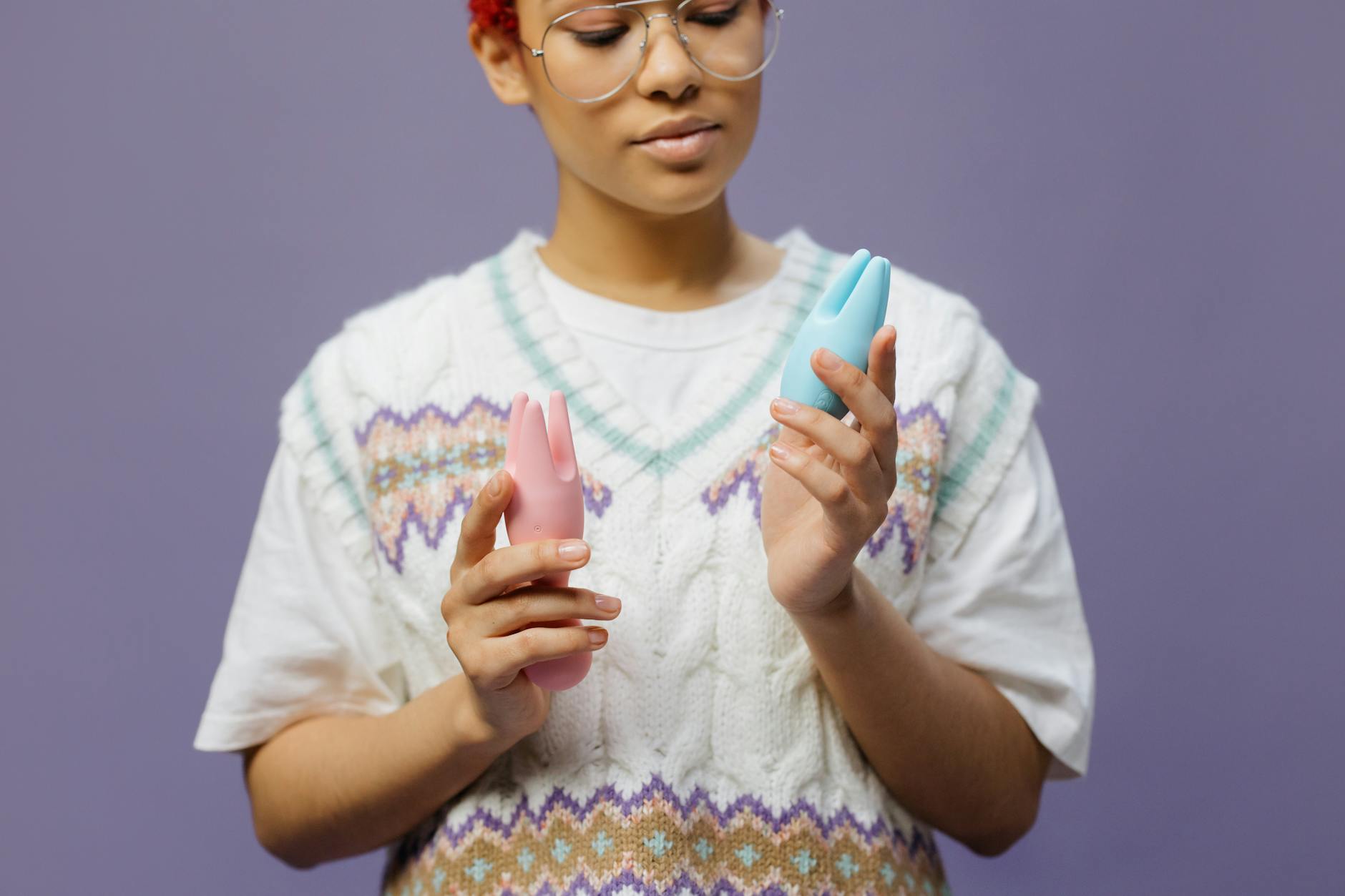
How Lemon Vibrators Help With Touch Aversion After Trauma
Let's be real. Touch aversion after trauma isn't something you're doing wrong. It's something your nervous system is doing right. Your body learned that touch wasn't safe, so it threw up a wall. That wall has kept you alive. But now you're wondering if pleasure is still possible on the other side of it, and the answer is yes. It just requires a different entry point.
Lemon vibrators, especially air-suction clitoral vibrators, are that entry point for many people. Not because they're magic. Because they give you complete control in a way that's physically distinct from touch.
Why touch aversion happens and why it's so stubborn
Trauma doesn't live in your mind alone. It lives in your nervous system. When someone has violated your physical boundaries, your body learns to tense up, retreat, or go numb at the first sign of touch. This is survival. Your body is literally trying to protect you from further harm.
The tricky part is that your body can't always tell the difference between safe touch and unsafe touch. So it protects you from both. Touch aversion can feel irrational to the people around you. It isn't. It's your system operating exactly as trained.
When you try to push through touch aversion by forcing yourself to accept touch from a partner, you're asking your nervous system to override its own alarm system. That rarely works. What works is meeting your system where it is right now and building new associations with pleasure that don't require you to surrender control to another person.
Why lemon clitoral vibrators feel different from human touch
This is the crucial distinction. A lemon vibrator, especially one using suction technology, creates stimulation that is consistent, controllable, and entirely yours. You hold it. You set the intensity. You start and stop. You press or pull away. There is no negotiation, no surprise, no moment where you have to trust someone else's intentions.
For someone with touch aversion, that autonomy isn't a bonus feature. It's the whole point.
The suction sensation itself is also fundamentally different from penetrative touch or manual stimulation. Suction stimulates nerves without requiring direct friction on sensitive tissue. It's a gentler, more diffuse sensation that many people with trauma histories find easier to tolerate initially. You're receiving stimulation, but in a way that doesn't trigger the same threat response as being held or penetrated.
Over time, as your nervous system realizes that this solo stimulation is safe and pleasurable, your baseline threat level drops. That's when other kinds of touch sometimes become possible again. Not because you "got over it," but because your body has new evidence that touch can lead to good things.
The nervous system piece most people skip
Here's what I see in my practice. People with touch aversion often dive straight into partnered sex as a way to "prove" they're healing. That's backwards. Your nervous system needs evidence of safety before it will relax. Solo pleasure with a lemon vibrator gives your system that evidence.
Each session where you experience pleasure without pressure, without someone else's hands on you, without needing to manage another person's arousal or timing, you're rewiring something foundational. Your brain is literally building new neural pathways that associate pleasure with safety and control.
This takes time. Maybe weeks, maybe months. But the research on nervous system recovery is clear. Small, repeated experiences of safety and pleasure change the brain more reliably than confrontation or forcing yourself to move faster than feels right.
How to start if you're really nervous
First, begin alone. Not eventually. Now. Solo exploration with a lemon clitoral vibrator is not a warm-up to partnered sex. It's healing in itself.
Start with low intensity. The Lem vibrator, for example, has multiple settings. Begin at pattern one or two. You're not chasing an orgasm. You're learning that your body can experience pleasure without threat. This is new information for your nervous system, and new information takes repetition to stick.
Keep sessions short. Fifteen minutes is enough. Twenty is plenty. You're not building stamina. You're building safety.
Stop anytime. This isn't about pushing through discomfort. If something feels wrong, stop. Your body knows what it needs. The whole point of solo play is that you get to listen to your body without negotiating with someone else's needs.
Use lubrication even if you think you don't need it. Trauma can numb sensation. Water-based lubricant helps reduce friction and makes the experience feel smoother and less demanding on your tissues. It also sends a message to your nervous system that you're taking care of yourself.
When touch aversion starts to soften
Some people notice shifts pretty quickly. A few weeks of regular solo exploration, and they feel less jumpy when a partner hugs them. Others take longer. Both are normal.
What I'm watching for in my practice is not whether touch aversion disappears completely, but whether your system starts to differentiate between safe and unsafe touch. A partner's hand becomes distinct from threat, rather than being lumped together with it.
When you're ready, lemon vibrators can also bridge partnered intimacy. Some people feel comfortable using a clitoral vibrator with a partner present, even if they're not ready for penetrative sex or manual stimulation. The vibrator stays in your control. Your partner can be close without being the source of stimulation. This is healing. This is not settling.
Others find that after solo work with a lemon sucker or air-suction toy, they're ready to explore other types of partnered touch. The pathway back to pleasure is individual. There's no right timeline.
The partnership angle, when you're ready
If you have a partner, talking about this early matters. Not to pressure yourself to move faster, but to let them understand what's happening. Touch aversion isn't about them. It's about your nervous system's history. When a partner understands that, they can stop taking it personally and start supporting your healing.
Some partners want to be involved in the process. Others respect the boundary of solo exploration. Both are valid. What matters is that you're building pleasure on your own terms first. Everything else follows from that foundation.
If you're considering solo exploration with a lemon clitoral vibrator while partnered, you might also want to explore how to introduce lemon vibrators to your partner without awkwardness. That conversation is often easier than you think.
When to reach out for more support
Solo pleasure is healing. It's not therapy. If touch aversion is severe, or if you find that even solo stimulation triggers panic or dissociation, please work with a trauma-informed therapist. There are specific modalities like EMDR and somatic experiencing that can help rewire nervous system responses to touch. A lemon vibrator is a tool, not a substitute for that work.
Also, if you're experiencing pain during solo play, that's information. Burning, sharp pain, or numbing that doesn't shift with lubrication or lower intensity might indicate trauma stored in your pelvic floor. Again, a trauma-informed pelvic floor physical therapist can help with that.
Healing from touch aversion isn't linear. Some days you'll feel ready. Other days your body will surprise you with how protective it still is. That's not failure. That's your system doing its job. Keep going.
People also ask
Can lemon suction vibrators help if my touch aversion is tied to sexual assault?
Yes, and this is where the autonomy piece becomes really important. Sexual assault violates control. A lemon clitoral vibrator returns that control entirely to you. You decide the intensity, the duration, the moment it stops. For many survivors, this reclamation of agency over their own body is the first step in rebuilding a sense of safety with pleasure. That said, working with a trauma-informed therapist alongside solo exploration usually accelerates healing.
How long does it usually take before touch aversion starts to improve?
This varies widely, but I typically see meaningful shifts within 4-8 weeks of consistent solo exploration with a lemon vibrator or other air-suction toy. Some people notice changes in their nervous system response to touch within days. Others take 3-4 months. Your timeline is your timeline. The key is consistency, not speed.
Is using a clitoral vibrator alone enough, or do I eventually need partnered sex?
Solo pleasure is complete in itself. It's not a stepping stone to partnered sex. If partnered sex becomes possible and feels good, that's wonderful. But some people's healing journey doesn't include that, and that's also wonderful. Your nervous system gets to decide what's safe, and you get to honor that.
Will my partner feel threatened if I explore with a lemon vibrator solo?
Some partners feel insecure about toys at first. Honest communication helps. You might explain that this is about your healing, not about inadequacy on their part. If your partner becomes hostile or demanding around your solo pleasure, that's a separate issue worth exploring with a couples therapist.
Can I use a lemon clitoral vibrator if I'm currently dissociating during sex?
Dissociation is your system's way of leaving when it doesn't feel safe. The goal of solo exploration is to create an environment where dissociation is less necessary. If you find yourself dissociating even alone with a toy, slow down significantly. Maybe just holding the vibrator without turning it on is the first step. You're rewiring safety, and that takes patience.
What if I use a lemon vibrator and feel ashamed afterward?
Shame is often inherited from messages about pleasure being wrong or dangerous. You're reclaiming your right to pleasure. Shame will probably show up. It's part of the process. Notice it, breathe, and keep going. Pleasure is not shameful. Your body is not shameful. This is healing.
You get to decide what's next
Touch aversion is a boundary your body built for a reason. You don't have to eliminate it to be whole. You might soften it. You might integrate it differently. You might find that the people you're closest to earn your trust slowly, and that's fine. Lemon vibrators and air-suction clitoral toys give you a way to experience pleasure while your nervous system is still healing. That's not settling. That's meeting yourself where you actually are.
Your pleasure matters. Your autonomy matters. Your timeline matters. Start there.