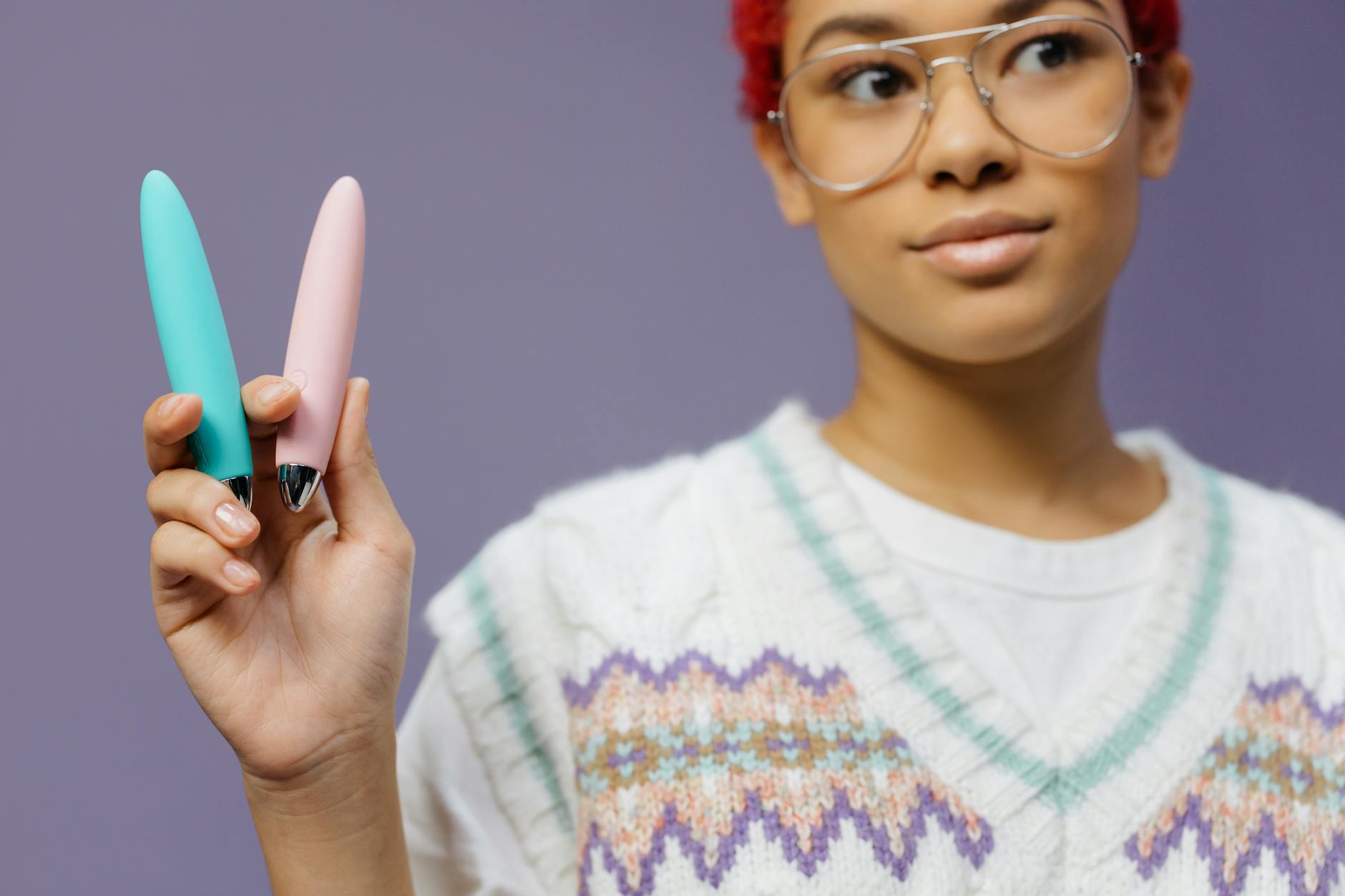
Your cycle is literally rewriting your pleasure blueprint
Honestly? Your pleasure doesn't stay the same month to month. Estrogen and progesterone are orchestrating a slow dance through your body every 28 days, and that includes your clitoris, your pelvic floor, your brain chemistry, and how sensitive you are to touch. Most people don't talk about this because it feels like a glitch. It's not. It's a feature.
When you use a lemon vibrator (or any clitoral vibrator) across your cycle, you're going to notice that sometimes it feels like a lightning strike and sometimes it feels like a gentle hum. Neither is wrong. Both are your body communicating what it needs.
The follicular phase: your sensitivity is climbing
Days 1 to 14 of your cycle (roughly), estrogen is rising. Your body is waking up. Blood flow to your genitals increases. Your clitoral tissue plumps slightly, the nerve endings become more responsive, and your brain is primed to notice pleasure signals.
This is when a lemon vibrator often feels most direct. Your clitoris is closer to the surface, more engorged, and easier to stimulate. Some people find that the patterns that felt intense last week now feel just right. You might orgasm faster. Orgasms might feel stronger or come in waves.
What helps: Start with a lower intensity pattern than you'd use mid-cycle. Your body is sensitive right now, and that's not a weakness. Sensitivity means precision. You can always turn it up.
Ovulation: the peak window
Around day 14, testosterone spikes for 24 to 48 hours. This is real. People with ovaries produce testosterone, and it's a primary driver of desire and arousal. During this window, you'll likely feel a surge in libido. A lemon vibrator might feel almost too intense if you're not paying attention. Your pelvic floor is more tense, your clitoris is maximally engorged, and your brain is flooded with dopamine.
This is when a lot of people experience their best orgasms of the month. It's not a coincidence. Your body is designed to prioritize pleasure right now.
What helps: Trust the intensity. You don't need to dial things back. Your body can handle it. If anything, exploring faster patterns or longer sessions feels natural during this phase.
The luteal phase: everything shifts
Days 15 to 28, progesterone rises and estrogen drops. This is when a lot of people notice that pleasure feels muted. Your clitoris is less engorged. Arousal takes longer to build. Orgasms might feel less intense or require more stimulation. A lemon vibrator that felt perfect two weeks ago might now feel like you're working for it.
This isn't your vibrator breaking. This is your body prioritizing something else. Progesterone is calming your nervous system, shifting you toward introspection and rest. Pleasure is still available. It just requires a different approach.
What helps: Give yourself longer warm-up time, at least 15 to 20 minutes. Use a water-based lubricant even if you usually don't need one. Start at a lower intensity and build up slowly. You might find that you prefer the Lemon's gentler patterns right now, or you might want to layer in partner touch or mental focus. Your pleasure hasn't disappeared. It's asking for patience.
Menstruation: the reset and rebuild
Days 1 to 5, hormones are at their lowest ebb. Some people find that pleasure is less accessible during bleeding. Others find that pelvic congestion during menstruation makes stimulation feel amazing. There's no universal script here.
What does change: Your pelvic floor might be more tense, especially if you experience cramping. Blood flow to your genitals is redirected toward your uterus. Some people feel less interested in sensation and more interested in rest. Others feel their desire spike.
If you do want to use a lemon vibrator during your period, skip the internal suction patterns (if applicable) and stick to external clitoral stimulation. Keep things gentle. Some people find that the vibration actually helps with cramp relief because it encourages pelvic floor release.
What helps: Listen to what your body is asking for. If you want pleasure, take it. If you want rest, that's also correct. Your cycle isn't a permission structure. It's information.
The science behind the shift
Estrogen primes your nervous system to respond to pleasure signals faster. It increases blood flow, makes nerve endings more responsive, and supports lubrication. Progesterone does the opposite. It's calming, introverted, and prioritizes rest over stimulation.
Your clitoris is erectile tissue. Like a penis, it engorges with blood. During high-estrogen phases, that engorgement is pronounced. During high-progesterone phases, it's more subtle. This changes how a lemon vibrator's suction mechanism feels. The physical sensation is different because your tissue is literally different.
Your brain is also cycling. Dopamine (pursuit, novelty, pleasure) is higher during the follicular phase and ovulation. Serotonin (mood stability, contentment) is higher during the luteal phase. This means your motivation to seek out pleasure might be higher early in your cycle and lower later on. That's not depression. That's physiology.
How to work with your cycle instead of against it
The most practical thing you can do is track. Not obsessively, not with apps that feel clinical. Just note: what day of your cycle are you? How did sensation feel? Was the intensity right? Did orgasm happen easily or did it require more focus?
After two or three months, patterns emerge. You'll learn that your body has rhythms, and those rhythms aren't flaws. They're information.
Here's what I recommend:
Follicular and ovulation phases: Experiment with intensity. Try patterns you wouldn't normally use. This is when your body can handle variation.
Luteal phase: Stick with what you know works. Lower intensity, longer warm-up, more lube. Consistency feels better than novelty right now.
Menstruation: Whatever feels good is the right call. If you want to skip sensation entirely, that's fine. If you want to use a lemon vibrator for pelvic relief, go for it. Your body is giving you signals. Receive them.
One thing that helps during lower-sensation phases is layering. A lemon vibrator plus a partner's touch. A lemon vibrator plus mental focus on a fantasy. A lemon vibrator plus deep breathing. You're not compensating for a broken body. You're creating the conditions your body needs to respond.
When to push back on the narrative
You might have heard that you should want sex less during your luteal phase. That's not actually true for everyone. Some people find that progesterone makes them want deeper, longer sessions with less intensity. Some people get off on the challenge of building arousal more slowly. Others genuinely feel less interested and that's fine too.
Your cycle is a framework, not a prison. If you want intense pleasure during your luteal phase, you can have it. You might just need to adjust your approach. Longer warm-up, better lube, more patience, different patterns on a lemon vibrator. Your body isn't refusing you. It's asking you to meet it differently.
The bigger picture
Understanding your pleasure cycle isn't about optimizing for peak orgasms. It's about lowering shame around variation. Most people assume their body is broken when pleasure feels different week to week. Learning that it's hormonal, predictable, and workable transforms how you relate to yourself.
Your cycle is information. A lemon vibrator is a tool. Together, they can help you learn your body in a way that sex ed never did. That's worth the attention.
People also ask
Why do lemon vibrators feel less intense during my period?
During menstruation, progesterone is declining and estrogen is at its lowest. Your clitoris is less engorged, blood flow is redirected toward your uterus, and your nervous system is more introverted. A lemon vibrator isn't less powerful. Your tissue is responding differently because of hormonal shifts. This is temporary and completely normal.
Can I use a lemon vibrator during my entire cycle?
Absolutely. Some people use lemon vibrators every day of their cycle. Others use them during specific phases when sensation feels best. Neither approach is wrong. Your cycle changes how sensation feels, not whether you can access it. If you want consistent pleasure across all phases, adjusting warm-up time, intensity, and lubrication helps you adapt to the changes your body is naturally going through.
Does my cycle affect how quickly I orgasm with a clitoral vibrator?
Yes. During your follicular phase and ovulation, orgasm often comes faster because your clitoris is more engorged and your nervous system is more responsive to stimulation. During your luteal phase, orgasm might take longer because arousal builds more slowly. This isn't a problem. It's just different timing. If faster orgasms appeal to you, the follicular phase is your window. If you prefer longer sessions with building intensity, the luteal phase might suit you.
Should I use a different lemon vibrator pattern at different points in my cycle?
You can if you want to. Some people find that lower, steadier patterns feel better during the luteal phase when arousal is slower to build. Faster patterns might feel better during ovulation when you're more responsive. But there's no rule here. You can use the same pattern all month and adjust other variables like warm-up time and lube instead. Experiment and see what your body tells you.
How long does it take to notice pleasure changes across my cycle?
Most people notice shifts within two to three cycles of paying attention. The changes are real and measurable, but they're subtle. You might miss them if you're only checking in occasionally. Tracking for a few months helps you see the pattern clearly.
Can hormonal birth control affect how a lemon vibrator feels?
Yes. Hormonal contraceptives flatten your natural cycle, so the variation in sensation across the month is much less pronounced. Some people on hormonal birth control notice consistent pleasure year-round. Others miss the natural rhythm and find that they want to explore different patterns or intensities more regularly. If you're considering changing birth control and worried about pleasure changes, this is worth discussing with a provider who understands sexual health.
Moving forward
Your cycle is a feature of being a person with a menstrual body. Pleasure across that cycle is also a feature, not a bug. A lemon vibrator helps you feel it clearly. The more you pay attention, the more you learn. And the more you learn, the more you can actually enjoy what's happening instead of fighting it.
Ready to explore? Start tracking your cycle alongside your pleasure experiences. After two months, you'll have a map. After three, you'll have confidence. Get in touch if you want to talk through what you're noticing.